

Care Tips
Here are some simple kokedama and orchid care tips from BotaniBec, designed to help you keep your indoor plants healthy, balanced, and thriving.
Whether you are new to kokedama plant care or already enjoy caring for indoor plants at home, these practical plant care tips will help you build a stronger connection with your green companions and enjoy their calming presence every day.
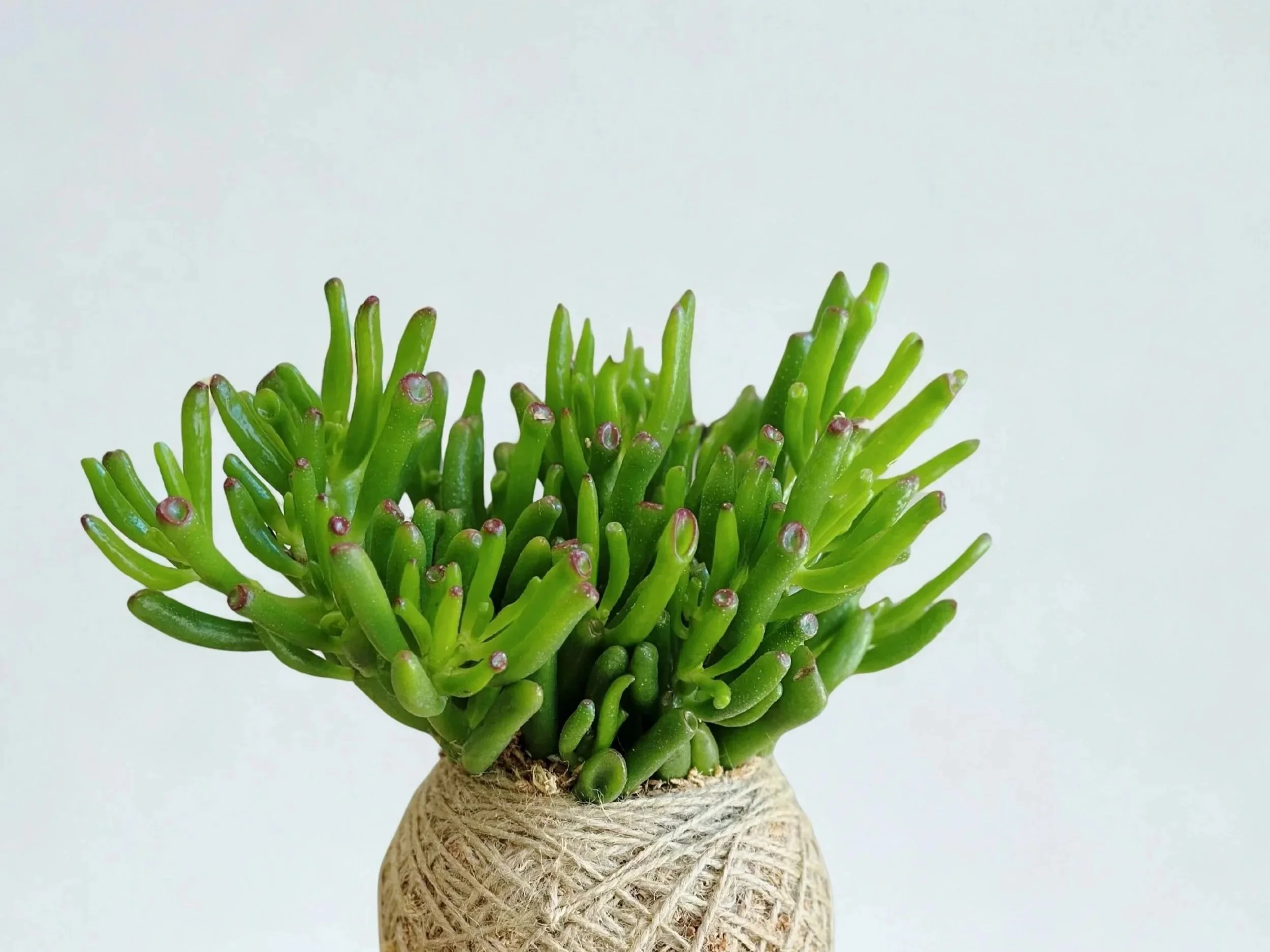
Care for Kokedama Wrapped with
Sphagnum Moss & String
Watering: Fill a small bowl or container with room-temperature water and place your kokedama inside, allowing it to soak from the bottom up. Let it absorb water until the moss ball feels heavy and fully hydrated — usually about 10–15 minutes.
After soaking, gently lift it out and allow any excess water to drain before returning it to display.
The frequency will depend on the plant type and environment. Most kokedamas enjoy watering about once a week, but you may need to adjust during warmer or drier months.
Light & Air: Keep your kokedama in bright, indirect light and ensure there’s good airflow around it. Avoid placing it in strong afternoon sun or overly dark corners.
Feeding: Feed your kokedama with liquid fertilizer every 4–6 weeks during the growing season (spring to early autumn). You can either mix it into your soaking water or spray it lightly onto the soil ball. Avoid fertilizing during winter when the plant rests.
Natural ageing & refresh: Over time, the natural string used in your kokedama may biodegrade as part of its organic lifecycle. This is completely normal. As the plant grows, it may require rewrapping or repotting to allow more space for healthy development.
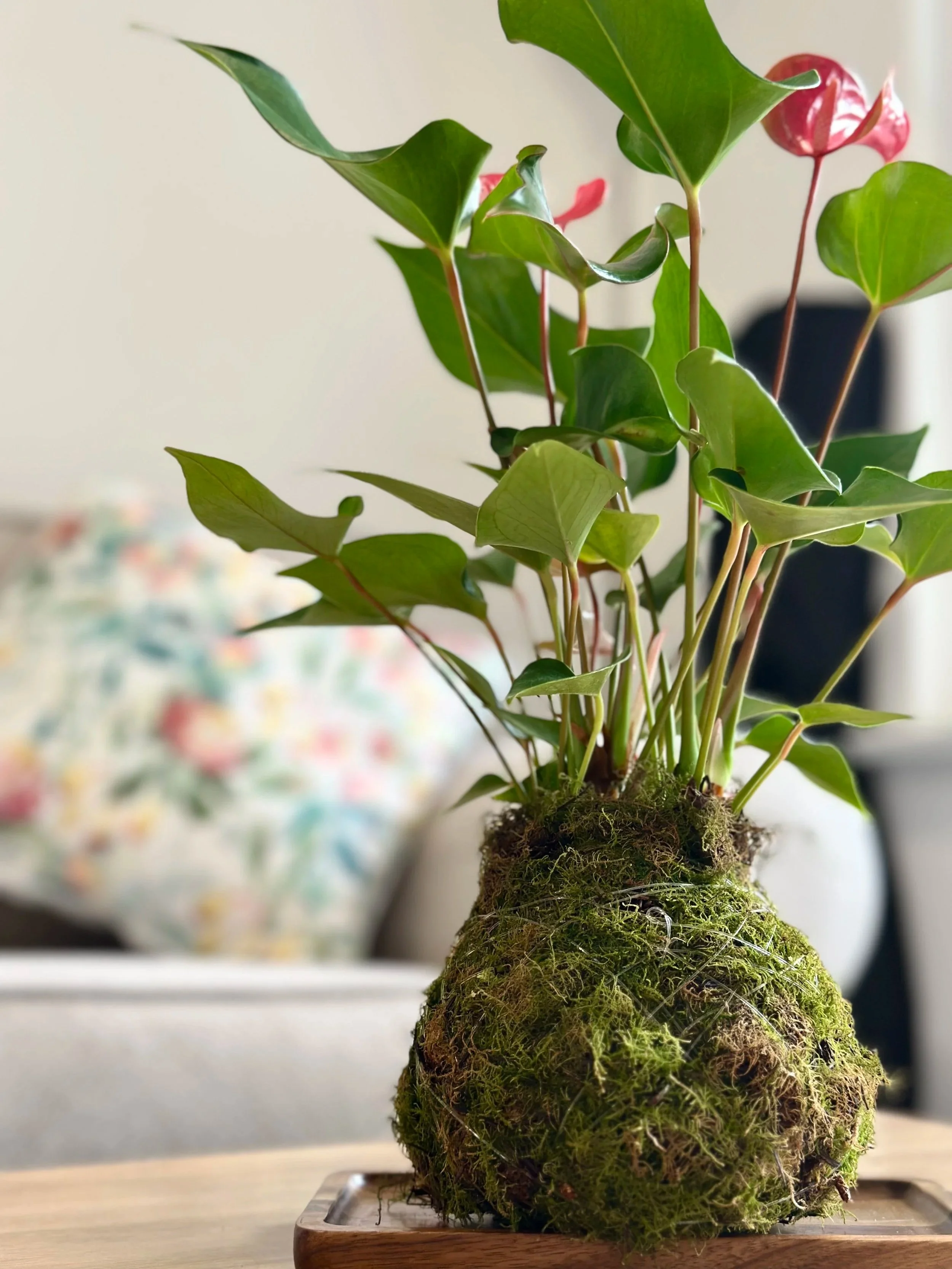
Care for Kokedama Wrapped with
Fresh moss sheet
Watering: Fill a small bowl or container with room-temperature water and place your kokedama inside, allowing it to soak from the bottom up. Let it absorb water until the moss ball feels heavy and fully hydrated — usually about 10–15 minutes.
After soaking, gently lift it out and allow any excess water to drain before returning it to display.
The frequency will depend on the plant type and environment. Most kokedamas enjoy watering about once a week, but you may need to adjust during warmer or drier months.
Misting: Fresh moss loves humidity and should never dry out completely. Mist the moss surface every day or at least every second day. In hot, dry or windy weather, daily misting is essential. Ensure the moss surface feels lightly moist, not dripping wet.
If the moss turns pale, crispy, or lightweight, it’s a sign it needs moisture immediately.
Light & Air: Keep your kokedama in bright, indirect light and ensure there’s good airflow around it. Avoid placing it in strong afternoon sun or overly dark corners.
Feeding: Fresh moss naturally grows in nutrient-poor environments and is very sensitive to fertilizer. In most cases, the moss itself does not require feeding at all.
However, the plant inside may benefit from fertilizer. You may choose one of the following methods:
Option 1 — Targeted Feeding
Use a diluted liquid fertilizer (¼ strength)
Apply directly to the soil/root area, avoiding contact with the fresh moss as much as possible
Option 2 — Gentle Soak
Dilute fertilizer to ⅛ strength (very weak)
Briefly soak the entire kokedama
After soaking, mist the fresh moss thoroughly with clean water to wash away any fertilizer residue from the moss surface
Avoid frequent feeding and avoid leaving fertilizer sitting on the moss.
General Tips
If the plant becomes very light when you weigh it, usually moss turns pale, it’s a sign it’s too dry — time for a soak.
If the plant looks limp or yellowing, check for overwatering or lack of light.
Rotate your kokedama occasionally to encourage even growth.
When your kokedama grows too big, it may need more space. Bring it back to us for a rewrap service at a special rate, or simply move it into a larger pot yourself.

General Care for Phalaenopsis orchid
Watering: Let the roots guide you – they always know what they need.
There’s no need to follow a strict watering routine — every orchid has its own rhythm.
The best way to understand yours is to observe its roots.
Whether your orchid grows in moss or bark, each material holds moisture differently, which affects how quickly the roots dry out. The size of the plant and your home environment (warm, cool or dry) — will also gently shape its watering needs.
Take a moment every 2-3 weeks to observe the roots:
Silver-Grey Roots= Thirsty. Time for a drink!
Green Roots = Happy. No water needed.
How to Water:Take the inner pot to the sink. Water thoroughly until water runs out the drainage holes. Let it drain completely—never let your orchid sit in water.
Light: Orchid loves bright, indirect light.
A spot near the window is perfect, if the light is too strong, use a sheer curtain to soften harsh rays.
Too much sun will scorch the leaves.
Not enough light means no new flowers.
Fertilizing: Feed your orchid to encourage strong growth and beautiful blooms.
Spring & Summer: Fertilize once a month
Autumn & Winter: Give your plant a rest. Stop fertilizing during these cooler, darker months.
Pro Tips for Success
No Moving, please! Orchids get stressed by change. Once you find a good spot, try to leave it there, especially when it has buds.
After the Blooms Fade: Don't throw it away! Cut the flower spike just above a node (a small bump on the stem). With proper care, it may re-bloom for you next season.
Repotting: Repot every 1-2 years using a special chunky orchid bark mix, not regular potting soil.